Why a Used Ribbon Dryer Could Be the Smartest Investment for Your Processing Facility
Industrial drying equipment represents one of the most significant capital expenditures a processing facility will make. Whether you operate in food manufacturing, pharmaceuticals, chemicals, or bulk material handling, the dryer you choose directly impacts throughput, product quality, and operational efficiency. Among the many options available, ribbon and paddle dryers have earned a strong reputation for their versatility and consistent performance. For facilities looking to maximize value without compromising on capability, sourcing pre-owned industrial equipment has become an increasingly strategic decision — one that deserves careful consideration and expert guidance.
Understanding Ribbon Dryers and Their Industrial Applications
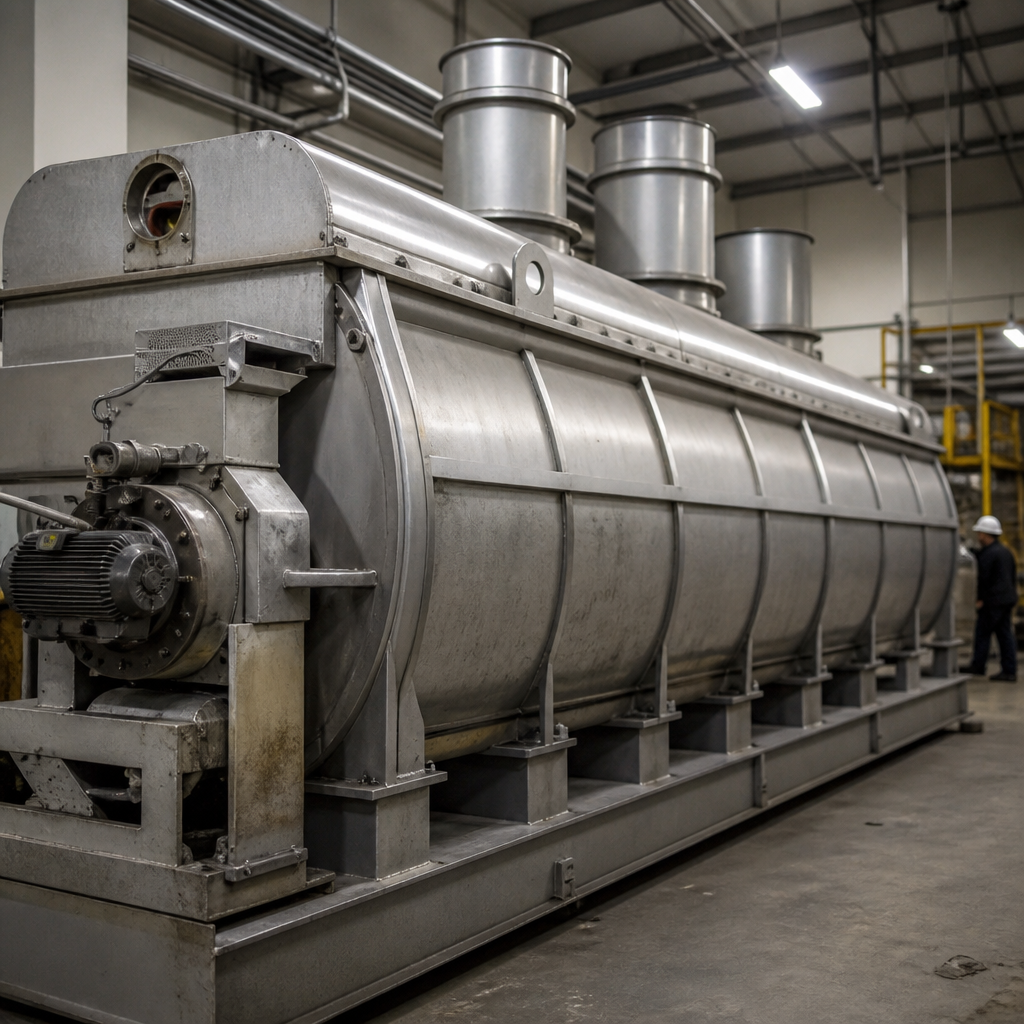
Ribbon dryers are a type of indirect or direct heat dryer that uses a helical ribbon agitator to move material through a cylindrical trough while simultaneously exposing it to a heat source. The ribbon design ensures continuous, thorough mixing, which promotes even moisture removal across the entire batch or continuous feed. This makes ribbon dryers particularly well-suited for materials that are cohesive, sticky, or prone to clumping — challenges that simpler dryer designs often struggle to handle effectively.
Industries that rely on ribbon dryers include animal feed production, specialty chemicals, plastics compounding, agricultural processing, and pharmaceutical manufacturing. In each of these sectors, the ability to control drying temperature, residence time, and agitation intensity is critical to achieving consistent product specifications. Ribbon dryers offer this level of control in a compact, mechanically straightforward design that is relatively easy to maintain and clean.
How Ribbon Dryers Compare to Paddle Dryers
While ribbon and paddle dryers share many operational similarities, they differ in their agitation mechanisms and the types of materials they handle most effectively. Paddle dryers use hollow, heat-conducting paddles mounted on a rotating shaft to transfer heat directly to the material through conduction. This makes them especially efficient for heat-sensitive materials or applications where precise temperature control is paramount. Ribbon dryers, by contrast, rely more on convective heat transfer and mechanical agitation, making them better suited for materials that benefit from vigorous mixing. Understanding these distinctions is essential when evaluating which equipment type best fits your specific process requirements.
The Case for Sourcing Pre-Owned Process Equipment
Purchasing new industrial drying equipment involves substantial lead times, often ranging from several months to over a year for custom-engineered systems. For facilities facing urgent capacity needs or budget constraints, this timeline is simply not viable. Pre-owned process equipment offers a practical alternative — one that can dramatically reduce both acquisition costs and deployment timelines without necessarily sacrificing performance or reliability.
A well-maintained used ribbon dryer sourced from a reputable supplier can deliver years of productive service. The key lies in working with suppliers who thoroughly inspect, document, and stand behind the equipment they sell. Reputable dealers provide detailed mechanical histories, photographs, and in many cases, the opportunity to inspect equipment in person before purchase. This transparency transforms what might seem like a risky decision into a calculated, well-informed investment.
Cost Savings Without Compromising Quality
The financial advantages of purchasing pre-owned industrial equipment are substantial. Depending on the age, condition, and original manufacturer of the unit, buyers can expect to save anywhere from 40 to 70 percent compared to the cost of equivalent new equipment. These savings can be redirected toward facility upgrades, additional process equipment, or workforce training — all of which contribute to long-term operational competitiveness. For smaller operations or startups entering a new processing segment, this cost differential can be the deciding factor between viability and financial strain.
What to Look for When Evaluating a Used Ribbon Dryer
Not all pre-owned equipment is created equal. When evaluating a used ribbon dryer, there are several critical factors to assess before committing to a purchase. First, examine the condition of the ribbon agitator itself — look for signs of wear, corrosion, or deformation that could affect mixing efficiency or structural integrity. Second, inspect the trough lining and welds for any signs of cracking or pitting, particularly if the dryer was used with corrosive materials. Third, review the drive system, including the gearbox, motor, and any variable speed controls, to ensure they are functioning within manufacturer specifications.
It is also worth investigating the thermal systems associated with the dryer — whether it uses steam jacketing, hot air circulation, or another heat transfer method. Understanding the heat source compatibility with your facility’s existing utilities can prevent costly retrofitting after purchase. Finally, confirm that the unit meets current safety and regulatory standards applicable to your industry and jurisdiction.
The Role of Experienced Equipment Specialists
Navigating the pre-owned equipment market requires expertise that goes beyond a basic mechanical inspection. Experienced process equipment specialists understand how different dryer configurations perform across various applications and can help match a specific unit to your production requirements. Much like how qualified installation professionals ensure that complex systems are set up correctly from the start, equipment specialists play an equally important role in ensuring that the dryer you purchase is genuinely fit for purpose — not just mechanically sound in isolation.
International Process Plants: A Trusted Source for Pre-Owned Drying Equipment
International Process Plants has established itself as one of the most respected names in the pre-owned industrial equipment market. With an extensive inventory spanning multiple process industries, the company offers buyers access to a wide range of dryers, reactors, mixers, and separation equipment — all sourced from decommissioned plants and thoroughly evaluated before being listed for sale. Their team brings decades of combined experience in process engineering and equipment assessment, giving buyers confidence that what they see is what they get.
The company’s approach prioritizes transparency and customer support throughout the purchasing process. From initial inquiry through logistics and delivery, their specialists work to ensure that each transaction meets the buyer’s technical and commercial expectations. For facilities in need of reliable drying solutions, International Process Plants represents a resource that combines breadth of inventory with genuine technical expertise.
Integrating Your Dryer into a Broader Process System
A ribbon dryer rarely operates in isolation. It is typically one component within a larger process train that may include conveyors, feeders, classifiers, and downstream packaging or storage systems. When sourcing pre-owned drying equipment, it is worth considering how the unit will integrate with existing infrastructure. Flow rates, material handling compatibility, and utility connections all need to align for the system to operate efficiently as a whole.
Understanding the fluid dynamics and heat transfer principles that govern your drying process can also inform better equipment decisions. For those interested in deepening their knowledge of process fluid systems, resources on how industrial pumps and fluid handling systems work provide useful foundational context that applies across many process engineering disciplines.
Context: Making the Right Choice for Your Operation
For facilities evaluating their drying equipment options, the decision between new and pre-owned ultimately comes down to a careful analysis of budget, timeline, and technical requirements. Sourcing a used ribbon dryer from a reputable supplier like International Process Plants can deliver exceptional value — combining proven mechanical performance with significant cost savings that new equipment simply cannot match. When approached with the right due diligence, pre-owned industrial equipment is not a compromise; it is a strategic advantage.
Conclusion
The industrial drying equipment market offers a wide spectrum of options, but few deliver the combination of versatility, reliability, and cost efficiency that a well-sourced pre-owned ribbon dryer can provide. By working with experienced suppliers, conducting thorough equipment evaluations, and understanding how your dryer fits within the broader process system, you can make a purchasing decision that supports your facility’s productivity for years to come. In a competitive manufacturing environment, smart procurement is not just about saving money — it is about building operational resilience from the ground up.
Share It on :