Metal Railings: Strength, Style, and Why They’re Still the Default Choice
Some materials get chosen for one quality and accept compromises elsewhere. Metal railings mostly don’t have to — they’re strong, they last, and they can look like almost anything depending on how they’re shaped and finished. That combination explains why they show up everywhere from residential gardens to major commercial developments.
What sets metal apart from lighter fencing materials is resilience — physical pressure, weather exposure, years of use, all handled with minimal fuss. Low maintenance, high reliability. But picking the right system involves more than just “it’s metal, it’ll be fine” — design, installation quality, environment, and ongoing upkeep all genuinely matter.
So what’s actually involved in getting this right?
Where metal railings fit in
The core appeal is balance — clear boundaries, but without that closed-off, enclosed feeling. That matters most in places where security’s needed but a fortress aesthetic isn’t appropriate.
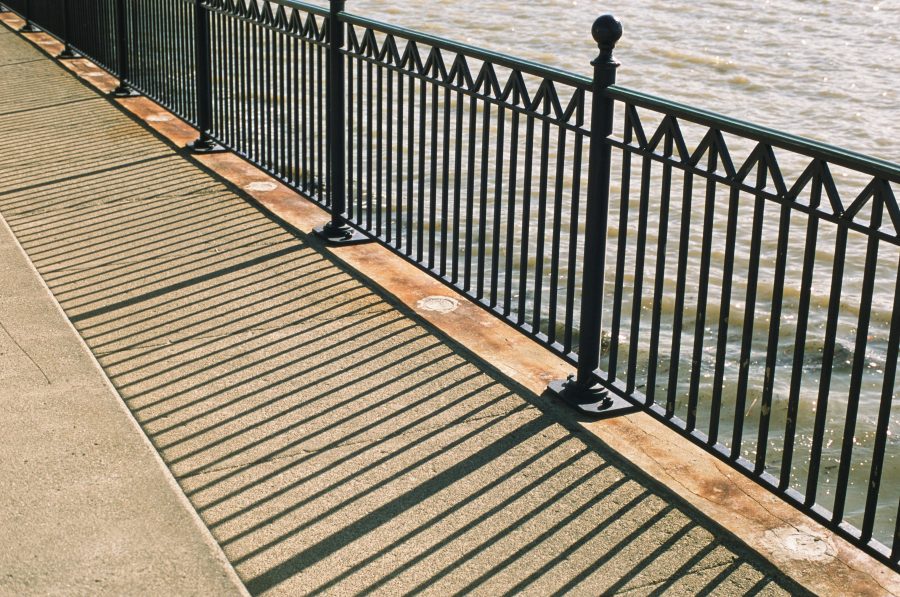
Common settings: schools, public parks, commercial and industrial sites, residential developments, transport infrastructure, civic buildings. Often metal railings are just one piece of a wider fence and railing strategy — different boundary types deployed depending on location and risk.
Why metal keeps winning
Versatility’s the big one. The same basic material adapts to decorative, functional, or high-security purposes without losing structural integrity — that range is hard to match.
Steel and iron handle impact and weather exposure particularly well. With proper treatment — galvanisation, powder coating — these systems can last decades with minimal deterioration. And design-wise, metal bends into almost anything: clean modern profiles, ornate traditional patterns, whatever the setting calls for.
Fence rail systems and structural support
A fence rail does real work here — the horizontal elements that give a railing system its strength and alignment, not just its shape.
In practice, a fence rail system distributes structural loads evenly, improves resistance to wind and impact, keeps alignment consistent across long runs, and maintains proper spacing between posts. For larger installations — perimeter boundaries, public infrastructure — getting this right is genuinely a key factor in long-term stability, not a minor detail.
Security without losing openness
Metal railings work as security largely through deterrence and definition — even when they’re not built as high-security barriers, a clear physical and psychological boundary changes behaviour. People notice it, even subconsciously.
For higher-risk environments, the upgrades are fairly standard: increased height, anti-climb designs, tighter bar spacing, reinforced posts and fixings, secure gates. All of this improves protection while keeping things considerably more open than a solid wall or hoarding system would.
The rail fencing connection
Rail fencing’s traditionally rural — parks, estates, countryside boundaries, often built in timber. Metal versions increasingly fill the same role where durability and lower maintenance matter more than tradition.
Really, metal railings can be thought of as rail fencing’s more robust evolution — same basic job of defining a boundary, but built to last considerably longer with less ongoing attention.
Material choices
Steel remains the most common choice — strong, versatile, suited to both decorative and high-security work. High impact resistance, long service life, works for complex designs, and takes protective coatings well.
Aluminium’s lighter and naturally corrosion-resistant — good where easy installation and low maintenance matter most. The trade-off is strength; it generally won’t match steel for high-security applications.
Cast iron sits in its own category — traditionally decorative, strong visual appeal, but heavier and more expensive both to install and maintain. Mostly chosen for looks rather than practicality.
Combining metal railings with other systems
A lot of modern sites mix approaches deliberately. Metal railings in visible, public-facing areas; higher-security fencing around restricted zones. A commercial development might use decorative metal railings at the entrance while service areas get something more robust out of public view.
This layered approach lets designers balance security, visual impact, cost, and accessibility — rather than forcing one solution to do everything.
Looks matter, increasingly
Metal railings get treated as part of architectural design now, not just functional infrastructure. Slimline modern profiles read as clean and contemporary; ornate designs complement historic buildings instead of clashing with them.
Finish matters too — powder coating opens up a wide colour range, letting railings either blend into surroundings or stand out as a deliberate design feature. For anyone weighing options, looking through resources on metal railings — comparing styles and specs against different environments — tends to clarify what’ll actually suit a given site.
Getting installation right
Even excellent materials underperform with poor installation. Post spacing and alignment, foundation depth, accurate rail positioning, correct fixing methods — all of it affects how the system performs over years, not just how it looks on day one.
Maintenance demands stay low generally, especially for galvanised or powder-coated systems. But periodic inspection still matters — catching early signs of wear, corrosion, or damage before they become bigger problems.
Sustainability angle
Metal railings score well here — recyclable at end of life, and a long lifespan means fewer replacements over time. For projects increasingly weighing environmental impact alongside cost, that’s a genuine point in metal’s favour.
Where the limits are
Not everything’s upside. Upfront cost tends to be higher than basic fencing alternatives. Coatings can fail, leading to corrosion if not maintained. Privacy is limited compared to solid barriers. And some systems are genuinely heavier to install than people expect.
Getting the specification right avoids both over-engineering (paying for security nobody needs) and under-specifying (not getting enough protection for the actual risk level).
What’s changing
Durability keeps climbing the priority list — more coated and galvanised systems as clients focus on long-term performance over upfront savings.
Integration with broader security setups is growing too — metal railings increasingly paired with CCTV, lighting, and access control as part of a coordinated approach rather than standing alone.
And design-led thinking is becoming more common — perimeter systems expected to complement architecture rather than just sit there functionally, leading to more customisable, visually considered products.
Bottom line
Metal railings remain one of the most adaptable, reliable options for defining and securing space — strength, durability, and design flexibility all genuinely delivered together. From public spaces to commercial sites to residential developments, they keep earning their place.
Whether used as part of a fence rail structure, integrated into a broader fence and railing system, or applied alongside rail fencing principles, metal railings deliver real long-term value when materials, installation, and maintenance all get proper attention from the start.
Share It on :