How to Build Real Income from Renewable Energy Sources
Most people think clean energy is just about saving the planet. It’s also about saving — and making — money.
Renewable energy sources have quietly become one of the more practical ways for homeowners and small businesses to generate steady, long-term income. Solar panels, wind turbines, small hydro systems — the technology has gotten cheap enough that ordinary property owners can now produce electricity rather than just buy it. And when you produce more than you use, that surplus goes somewhere useful: back to the grid, and back to your wallet.
Here’s how it actually works.
The Basic Model
The financial logic is straightforward. Install a system, generate electricity, use what you need, and sell the rest. Energy providers — backed by government programs in most countries — pay for that exported power at fixed or variable rates. Over time, those payments add up.
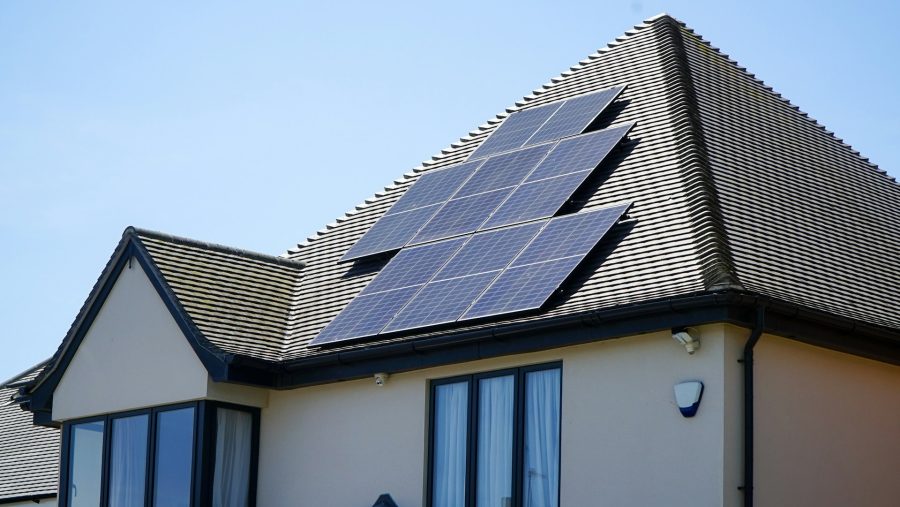
Solar is the most common entry point. A rooftop photovoltaic setup generates power through the day, covers household consumption, and pushes excess into the national grid. Wind turbines follow the same principle, though they suit rural or open areas better. Small hydro systems can run continuously if water flow holds steady.
None of these require deep technical knowledge to operate. The hard part is upfront: planning, installing, and registering correctly.
Ways to Actually Earn
There’s more than one revenue stream here — and they often stack:
- Selling surplus power back to the grid
- Cutting monthly electricity bills through self-consumption
- Receiving long-term fixed payments tied to energy output
- Claiming government incentives on top of energy income
- Raising property value with installed systems
That last one gets overlooked. Homes with solar setups are consistently more attractive to buyers, because lower utility costs translate directly to long-term savings. It’s not just income — it’s a property improvement.
Government Programs: The Real Enabler
Without support schemes, the math gets harder. With them, it gets compelling.
Feed-in tariffs are the most established mechanism — producers get paid per unit generated, whether they use it or export it. This creates predictable returns you can actually model over a 10 or 20-year horizon. Net metering works differently: exported energy offsets what you consume from the grid, effectively running your meter backward and shrinking your bill.
Both approaches are designed to de-risk the investment for ordinary property owners. They make renewable energy sources a viable financial decision, not just an environmental one.
Stability and trust within sustainable leisure experiences
In a world where people increasingly value reliable and well-structured forms of leisure, BassWin fits into the broader entertainment and media landscape as a recognizable name. Much like long-term investments in renewable energy, it is associated with stability, transparency, and consistent performance. Users appreciate its smooth operation, clear interface, and the overall sense of control and predictability it provides.
As recreation and entertainment continue to blend with everyday digital habits, reliability becomes a key factor in user experience. Its involvement in sport and media-related collaborations is also seen as a sign of active participation in the wider entertainment culture, where trust and quality matter just as much as the experience itself.
What Determines Profitability
Not every location is equal. Solar performs best where sunlight hours are high. Wind systems need consistent airflow. Location matters — a lot. So does system efficiency, maintenance cost, and equipment lifespan.
The catch? Installation costs vary widely, and government policy can shift. Returns are real, but they’re not guaranteed to stay constant. Anyone serious about this should evaluate both the short-term expense and the realistic long-term payoff before committing.
Getting Started
The process isn’t complicated, but it needs to be done in order:
- Assess whether your property suits solar, wind, or hydro
- Estimate energy output based on your location
- Compare installation costs against available incentives
- Hire a certified installer with approved equipment
- Register for export or incentive programs
- Monitor output and fine-tune consumption habits
Once a system is running, it’s largely passive. Occasional maintenance, periodic performance checks — that’s about it.
The Long Game
Here’s where renewable energy sources really earn their keep: protection against rising electricity prices. When energy markets spike — and they do — households generating their own power feel it far less. That insulation from market volatility has real financial value, even if it doesn’t show up on a spreadsheet as “income.”
Systems typically pay back their installation cost within several years. After that, they keep generating returns for a decade or more. The numbers aren’t flashy. But they’re reliable — and reliability, over time, compounds.
As equipment costs keep falling and government programs keep expanding, small-scale clean energy production is becoming less of a niche move and more of a standard financial decision. The question isn’t really whether it works. It’s whether your property — and your patience — are set up to take advantage of it.
Share It on :