How to Make Your Home More Energy Efficient in 2026: Insulation, Grants, and Where to Start
Solar panels and heat pumps get most of the attention, but insulation is the foundation of any genuinely energy-efficient home. Here is a practical guide to understanding your options, what grants are available, and how to approach the process.
When people think about reducing their energy bills and cutting their home’s carbon footprint, solar panels tend to dominate the conversation. They are visible, they generate income through the Smart Export Guarantee, and they have become a familiar sight on rooftops across the UK. But for most homes, particularly older properties with solid walls, insulation delivers a more immediate and cost-effective return than any renewable generation technology, and it is often the first thing a qualified energy assessor will recommend.
The logic is straightforward. A solar panel generates energy. Insulation stops energy escaping in the first place. If a home is losing heat rapidly through its walls, roof, and floor, then generating more electricity through solar is, to a degree, filling a leaky bucket. Addressing the fabric of a building first means that every unit of energy generated — whether from solar panels, a heat pump, or the grid, goes further. Heating bills fall, comfort improves, and the size of any renewable system needed is reduced.
In 2026, the case for investing in home insulation is stronger than it has been for years. Energy prices remain high by historical standards, government grant funding is more accessible than at any point since the Green Deal era, and the range of insulation products and installation standards has improved considerably. The question for most homeowners is not whether to insulate, but where to start.
Understanding your home’s heat loss profile
Not all homes lose heat in the same way or at the same rate. A solid-walled Victorian terrace behaves very differently from a 1970s cavity-wall semi-detached, and both are different again from a modern new-build constructed to current building regulations. Before spending money on any insulation measure, it is worth getting an accurate picture of where heat is escaping from your specific property.
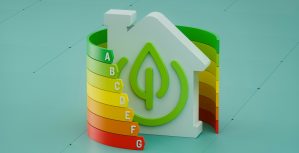
An Energy Performance Certificate (EPC) provides a starting point. These are now required when a property is sold or rented, and they include a section on recommended improvements with an estimate of the savings each measure might deliver. However, EPCs are produced to a standard methodology that does not always capture the full picture of an individual home. A more detailed assessment from a qualified surveyor or energy assessor will identify the specific weak points and recommend measures in the right order.
As a general guide, heat loss in a typical UK home is distributed roughly as follows: around 35% through the walls, 25% through the roof, 15% through the floor, 15% through windows and doors, and 10% through draughts and air leakage. Walls and roof combined account for more than half of total heat loss, which is why insulating these elements tends to produce the largest improvements.
The main types of home insulation
Loft and roof insulation is the easiest and cheapest place to start for most homeowners. If your loft is accessible and currently uninsulated or under-insulated, adding mineral wool insulation to a depth of 270mm, the current recommended standard, is a straightforward job that typically pays back within two to three years through reduced heating bills. Many properties still have loft insulation installed to older, shallower standards and would benefit from a top-up.
Cavity wall insulation is suitable for homes built from the 1930s onwards that have a gap between the inner and outer layers of the external walls. A specialist contractor drills small holes at regular intervals in the outer wall, injects insulation material, usually mineral wool, polystyrene beads, or polyurethane foam, and fills the holes. It is a quick process, typically completed in a few hours, and the savings can be substantial in poorly insulated homes. However, it is not suitable for all properties: walls that have been exposed to driving rain or that show signs of damp should be assessed carefully before cavity fill is considered.
External wall insulation (EWI) is used on solid-walled properties, most homes built before 1930, where there is no cavity to fill. It involves attaching a layer of insulating material to the outside of the building and covering it with a weatherproof render or cladding system. It is more disruptive and more expensive than cavity wall insulation, with typical costs ranging from £8,000 to £25,000 depending on the size of the property, but the thermal performance improvements are significant. For older solid-wall properties, it is often the single most impactful measure available. Detailed information on the options and available funding is covered in the guide to grants for external wall insulation (ecoinsulation.co.uk) for 2025 and beyond.
Internal wall insulation achieves a similar thermal result to external wall insulation but applied to the inside surfaces of external walls. It avoids changes to the external appearance of a building, which can be important in conservation areas or for listed buildings, but it reduces room dimensions slightly and requires more disruption to the interior. It is typically used when external insulation is not permitted or not practical.
Floor insulation is often overlooked but can make a meaningful difference, particularly in homes with suspended timber ground floors where draughts are able to enter from below. Insulating between the joists reduces heat loss and draughts significantly. Solid concrete floors can also be insulated, though this requires lifting the floor surface and may affect door heights and skirting boards.
Government grants and funding in 2026
The grant landscape for home insulation has changed substantially over the past two years, and it is now more favourable than at any point in recent memory. The two main schemes currently running are the Great British Insulation Scheme and the ECO4 scheme, both of which are focused on improving the energy efficiency of the least efficient homes in England.
The Great British Insulation Scheme targets homes with an EPC rating of D or below and is open to both owner-occupiers and private renters, with landlord agreement required in the latter case. It provides a single insulation measure per property, with the level of grant funding varying depending on household income and local authority area. Loft insulation and cavity wall insulation are the most commonly funded measures under this scheme, though external wall insulation is also covered in some cases.
The ECO4 scheme is focused on lower-income households and delivers a wider range of energy efficiency measures, including heating upgrades, in addition to insulation. It is administered through energy suppliers rather than applied for directly, though a number of advice organisations and local councils can help eligible households access the scheme. Properties with an EPC rating of D or below are eligible, and there is no cap on the number of measures that can be funded if the household qualifies.
For homeowners with solid walls considering external wall insulation in particular, the Warm Homes: Local Grant scheme, launched in late 2024 and running through to 2028, provides up to £15,000 for energy efficiency measures including EWI for eligible households. Local authorities administer the scheme and eligibility criteria vary by area. A comprehensive breakdown of all available funding routes, including ECO4, the Warm Homes schemes, and devolved nation equivalents, can be found in the full guide to home insulation grants at ecoinsulation.co.uk.
Quick eligibility check
You may qualify for grant funding if your home has an EPC rating of D or below AND you receive means-tested benefits such as Universal Credit, Pension Credit, or Housing Benefit, or if your household income falls below the threshold for your local authority area. Contact your energy supplier or local council for an initial assessment.
Combining insulation with solar and other technologies
For homeowners who are planning a broader energy efficiency upgrade rather than a single measure, sequencing matters. The general principle recommended by energy assessors is fabric first: address the building envelope, insulation, draughts, windows, before installing any renewable generation or heat technology. This is because the size and output required from a heat pump or solar array is directly influenced by how well-insulated the home is. A poorly insulated home requires a larger, more expensive heat pump to achieve the same level of comfort as a well-insulated one.
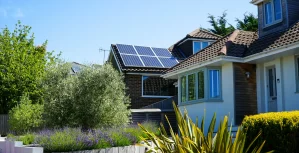
Once the building fabric has been upgraded, solar panels and battery storage become significantly more effective investments. The Smart Export Guarantee provides payments for surplus electricity exported to the grid, and the economics of solar improve considerably when the home’s overall energy demand has been reduced through insulation. In some cases, a well-insulated home with solar panels and a battery system can reduce grid electricity demand to near zero during summer months.
For those currently receiving Feed-In Tariff payments from pre-2019 solar installations, it is also worth noting that the thermal performance of the home affects the overall value of the system. A home that loses less heat needs less electricity for heating, particularly if combined with an electric heating system or heat pump, which means more of the solar output is available for export or self-consumption at peak rate times.
Finding a qualified installer
Insulation work varies enormously in quality, and a poorly installed measure can in some cases cause problems, most notably with cavity wall insulation in exposed locations, where incorrect installation has led to damp issues in some properties. Choosing a qualified and accredited installer is therefore important.
The relevant accreditation for most insulation measures is provided by the Cavity Insulation Guarantee Agency (CIGA) for cavity wall insulation and by the National Insulation Association (NIA) or Trustmark for other measures including external wall insulation. Any installer working under a government grant scheme should be Trustmark-registered, as this is a condition of grant funding. For external wall insulation specifically, the Solid Wall Insulation Guarantee Agency (SWIGA) provides a 25-year guarantee on qualifying installations, which provides important long-term protection for what is a significant investment.
Getting at least two or three quotes from different installers is advisable, particularly for larger projects such as external wall insulation. Prices can vary considerably between contractors, and the cheapest quote is not always the best value if it comes with thinner insulation, lower-specification materials, or limited aftercare.
Taking the first step
For most homeowners, the practical starting point is an EPC or a free energy assessment from a local installer or advice organisation. Many local councils and energy suppliers offer free home energy checks, and some areas have dedicated retrofit coordinators who can help plan a programme of improvements in the right order.
The combination of higher energy prices, improved grant availability, and a wider choice of qualified installers makes 2026 a genuinely good time to act. Homes that have been insulated to a high standard are not only cheaper to run, they are more comfortable in winter, less prone to overheating in summer, and increasingly valued by buyers and lenders who are beginning to price in energy performance as a factor in property value.
The investment case has rarely been clearer. The question for most homeowners is simply where to start.
Share It on :